Problem
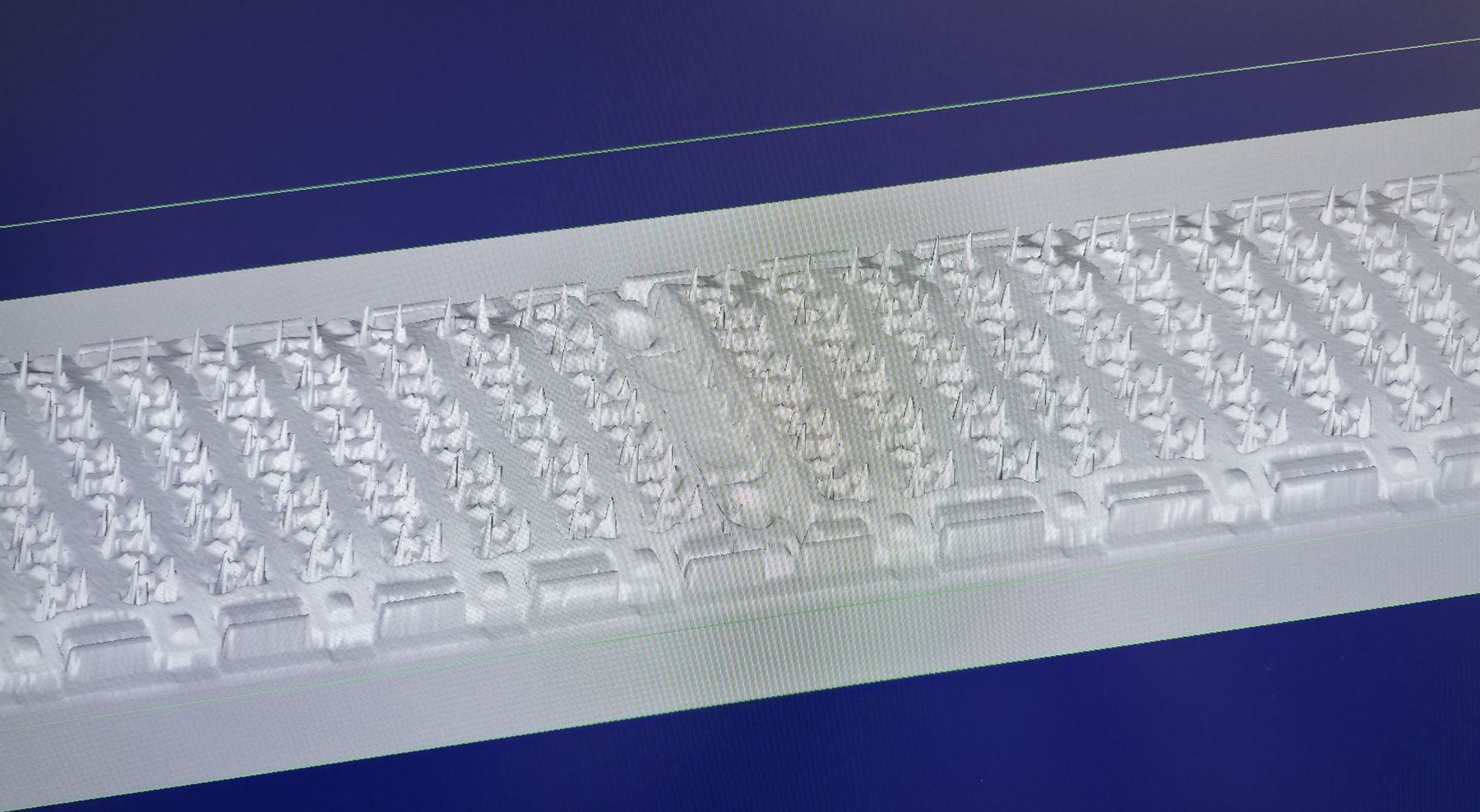
High-density connector and press-fit arrays are expensive to fixture. Mechanical tolerance stack-up, part-to-part variation, and changeover time make fixed fixturing slow to deploy and hard to maintain across NPI part numbers.
Approach
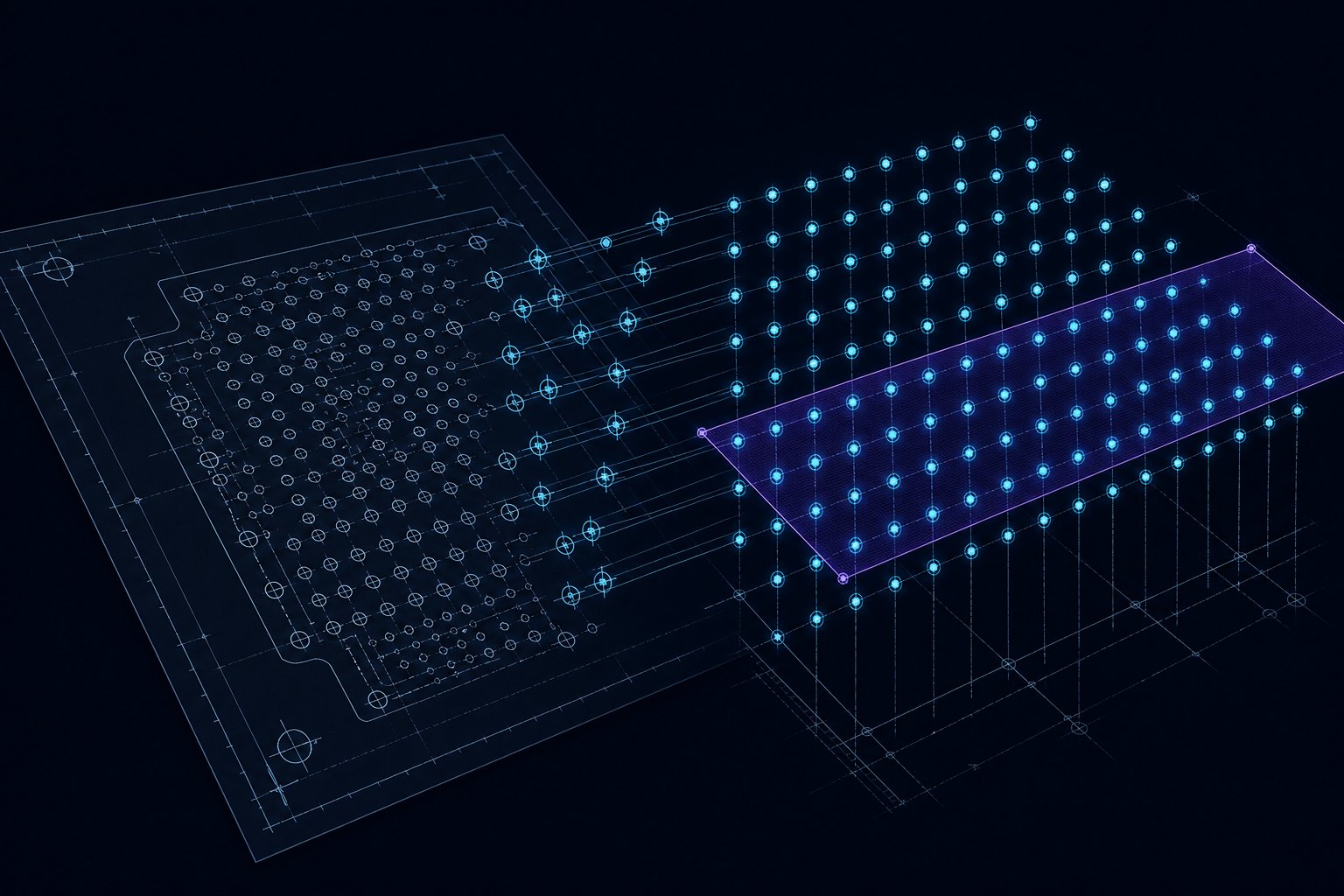
- Import nominal pin coordinates from drill drawings or CSV models via the Pin Grid Generator.
- Perform rough pose alignment and calibrated coordinate transforms in VisionPro/QuickBuild.
- Apply N-point fitting and best-fit rigid alignment to measured feature data.
- Score each pin with radial deviation analysis and per-pin pass/fail logic.
- Output barcode-linked CSV, overlay graphics, and customer-reviewable evidence.
Result
A production-ready workflow that reduces dependence on custom fixturing, accelerates deployment across part numbers, and gives engineers traceable acceptance data they can defend in FAT/SAT and production ramp reviews. The core concepts are the subject of a patent-pending filing.
My role
Concept originator and lead developer — I designed the nominal-coordinate ingestion (via the Pin Grid Generator), built the VisionPro/QuickBuild alignment and scoring workflows, defined the CSV/overlay output format, and supported validation with customers and production teams.
Stack
Try the alignment demo